
6 Shifts Coming to Your Restaurant Management System in the Next 6 Months
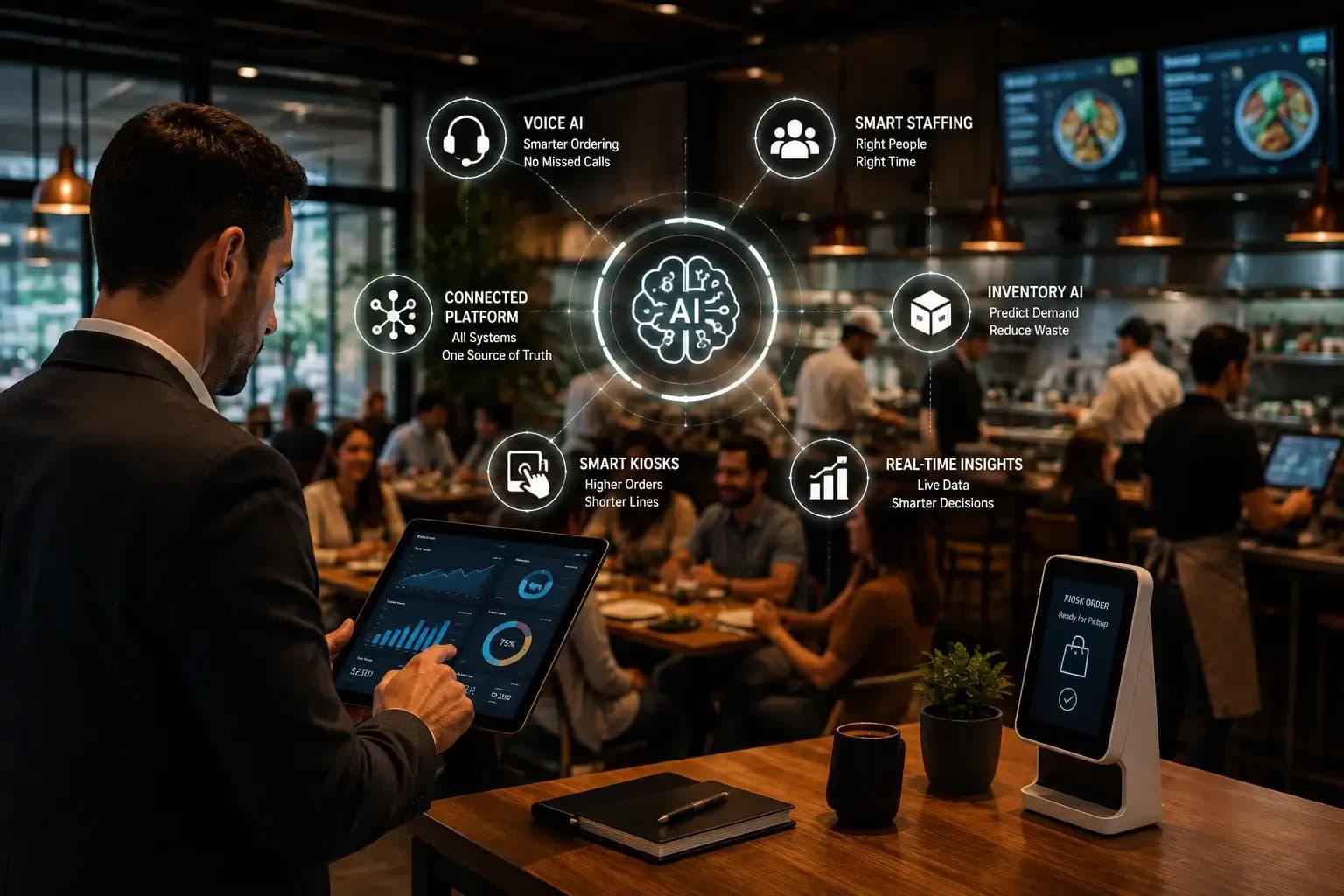
Ask any restaurant operator what keeps them up at night and the answers rhyme: thin margins, hard-to-fill shifts, rising food costs, and guests who expect faster, smoother service every single visit. What’s changing isn’t the pressure; it’s the tools available to answer it. Over the next six months, the restaurant management system stops being a cash register with extra features and becomes the operational brain of the business.
Here’s where we see the shift landing, and what it means for operators who want to move first.
1. Voice AI Moves From Pilot to Everyday Shift
Phones still ring during the dinner rush. Drive-thru lanes still back up. For years, taking those orders pulled staff off the floor. That’s ending. Conversational voice ordering has crossed from experiment into daily operations, answering calls, taking orders across phone, kiosk, and drive-thru, and handling menu questions without a person on the line. The near-term win isn’t only labor savings; it’s the revenue restaurants were quietly leaving on the table every time a call went unanswered.
2. Agentic AI Starts Running the Back of House
The next wave goes beyond answering questions to actually doing the work. New systems pull labor, inventory, and sales data into one place, then schedule staff, flag waste, and adjust ordering on their own. Think of it less as software you check and more as a system that hands the manager a decision instead of a spreadsheet. For multi-location brands especially, that’s the difference between reacting to last week’s numbers and acting on today’s.
3. Fragmented Tools Collapse Into One Platform
Most kitchens still run a patchwork: one system for POS, another for inventory, a third for scheduling, none of them talking to each other. Fragmented setups don’t survive peak hours. The clear direction for the coming months is consolidation: ordering, payments, inventory, kitchen displays, and reporting connected into a single source of truth. Fewer logins, fewer blind spots, and numbers everyone can trust.
4. Real-Time Data Replaces End-of-Week Guesswork
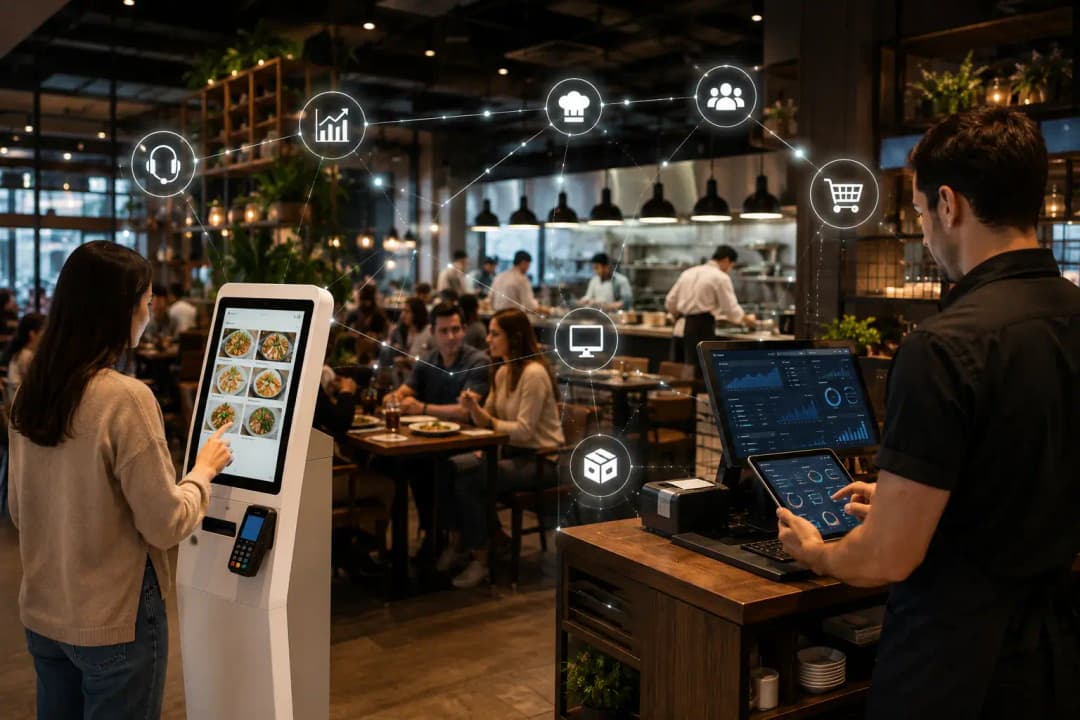
Waiting until Friday to learn Monday lost money is a habit restaurants can no longer afford. Live analytics let operators see what’s selling, what’s costing too much, and where labor is over- or under-allocated as it happens. A strong-selling item gets promoted before the shift ends; a supply cost creeping up gets caught before it eats the month. Intelligent automation turns raw data into decisions made in the moment.
5. Self-Service Gets Smarter and More Personal
Kiosks are no longer just a faster way to punch in an order. The new generation reads demand, personalizes recommendations, and syncs directly with the kitchen so nothing gets lost between the screen and the pass. Deployed well, self-service raises average order value and shortens lines at the same time, two outcomes that rarely move together.
6. How Guests Find You Is Changing Too
Diners are increasingly using AI assistants to decide where to eat. That quietly rewrites the rules of discovery: accurate menus, clear pricing, and consistent operational data now shape whether a restaurant even enters the conversation. Getting the back-end house in order is becoming a front-end growth strategy.
What This Means for Operators
None of these shifts require ripping everything out overnight. They reward operators who start now, connecting systems, cleaning up data, and choosing platforms built to grow with the business rather than boxing it in. The restaurants that treat technology as an operational core, not an add-on, will spend the next six months getting faster and leaner while everyone else catches up.
At Kineto, we build the Smart Solutions behind that shift: self-service kiosks, connected ordering, and intelligent automation designed for real restaurant operations, not slideware. As your technology partner, we help you turn efficiency, visibility, and growth from goals into daily results.
Ready to see what the next six months could look like for your restaurant? Explore our Restaurant Solutions or schedule a consultation with our team.
Learn more at www.kinetotech.com