
The Future of Retail Convenience Is No Longer Optional: Retail Expectations in 2026
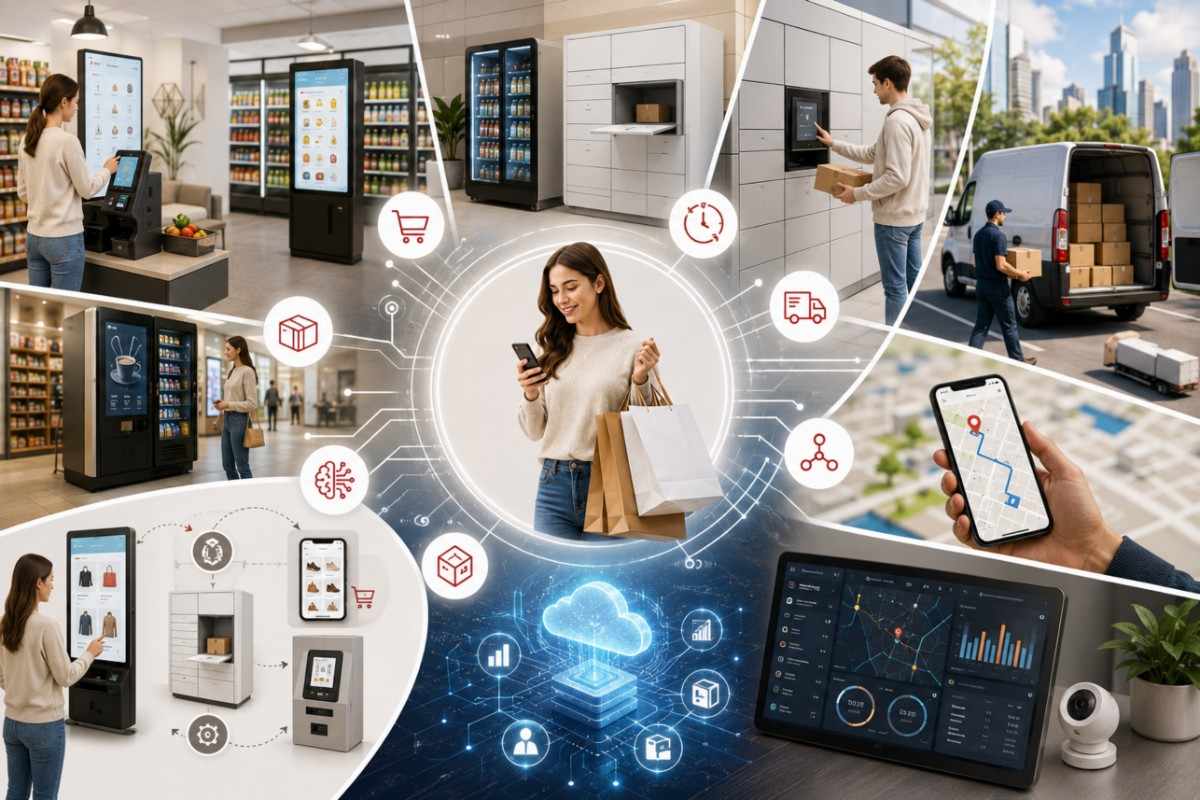
“Shopping habits have quietly rewritten the rulebook. The customer who once waited in line, called a support number, or accepted a two-week delivery window now expects the store to move at the speed of their phone. In 2026, retail technology is no longer a nice-to-have sitting behind the counter — it is the experience itself. And the businesses paying attention are already asking the right question: what do people actually expect now, and how do we meet it?”
Convenience Is the New Baseline, Not the Bonus
The single biggest shift is that convenience has stopped being a differentiator and become the minimum entry fee. Roughly four in five shoppers now expect personalized, frictionless experiences as standard, and nearly half already lean on AI tools to research and compare products before they ever reach a checkout. When something is slow, manual, or hard to recover from, customers do not complain — they simply leave.
For retailers, this reframes the whole conversation. The goal is no longer to impress people with technology. It is to remove the small frustrations that quietly cost sales: the closed store, the missed delivery, the confusing return, the payment method that is not accepted.
Expectation 1: Shopping That Never Sleeps
People increasingly expect to buy, collect, and return on their own schedule — not the store’s. This is why self-service has moved far beyond simple check-in screens. Smart kiosks, vending, and automated pickup points now form connected ecosystems that let customers transact 24/7 with little or no staff involved.
The demand is real and it is growing. Self-service technology is one of the fastest-expanding segments in retail, driven by a simple truth: automation raises throughput and improves the customer experience at the same time. A store that stays open around the clock without adding headcount is exactly the kind of operational efficiency modern retailers are chasing.
Expectation 2: The Last Mile Should Feel Effortless
Delivery is where expectations have sharpened the most. Interestingly, speed alone is not the whole story. Most shoppers are happy to wait a couple of days as long as the package arrives when promised — reliability and transparency now matter as much as raw speed.
The problem is that the final step of delivery is also the most expensive, accounting for up to half of total delivery costs, with a meaningful share of home deliveries failing on the first attempt. Smart parcel lockers and out-of-home pickup points solve both sides of this at once. A courier can serve well over a hundred parcels an hour at a locker hub, compared with a fraction of that going door to door. Deployments have been shown to cut failed deliveries by around a third and speed up collection dramatically — while giving customers secure, contactless pickup on their own terms.
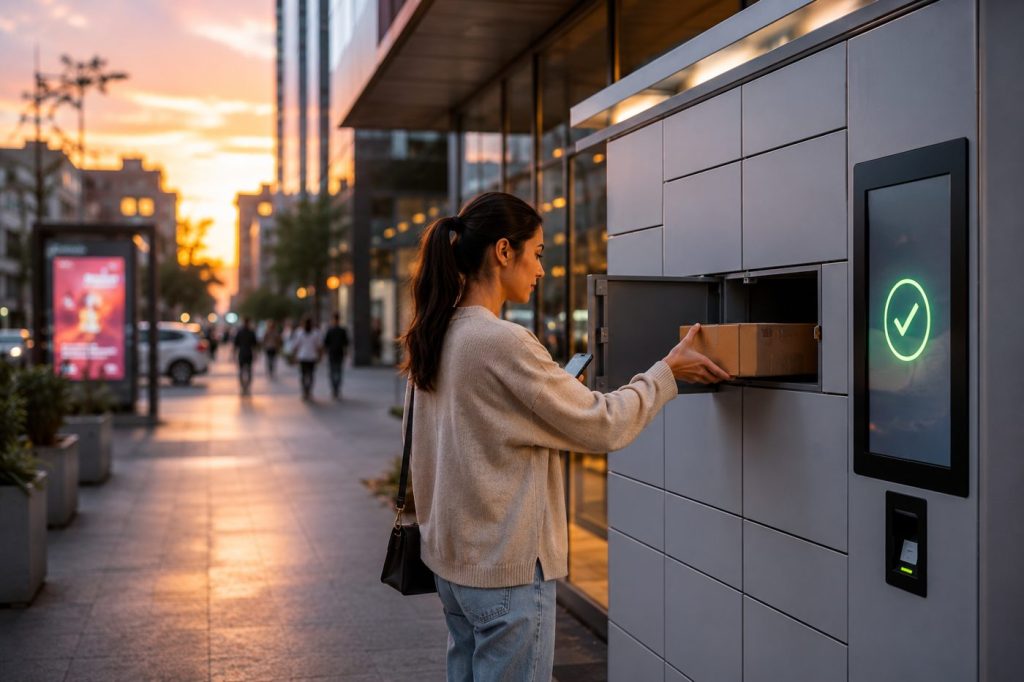
Smart lockers turn the last mile into a self-serve, 24/7 experience.
The Locker Advantage
100+ parcels per hour per hub. ~33% fewer failed deliveries. Secure, contactless pickup on the customer’s schedule.
Expectation 3: Smart, Not Just Digital
Being online is no longer enough; customers expect systems that are genuinely intelligent. AI has moved from the back office into the shopping journey, powering personalized recommendations, dynamic pricing, real-time inventory visibility, and automation that quietly keeps operations running. The retailers seeing returns are the ones using AI to reduce operational burden so their teams can focus on customers, not to replace the human touch entirely.
Connected IoT devices, cloud dashboards, and edge intelligence turn a single locker, kiosk, or vending unit into a live data point — one that tells operators what is selling, what needs restocking, and where the next opportunity sits.
Expectation 4: One Seamless Experience Across Every Channel
Customers no longer see “online” and “in-store” as separate worlds. They research on a phone, collect from a locker, and return through a kiosk — and they expect all of it to feel like one continuous experience. Unified commerce, where the front of house and back-end operations share a single view of the customer, has become a defining expectation of 2026. Any disconnect between channels is felt immediately.
Why This Matters for Growth Markets
These expectations are not confined to mature markets. Across the GCC, smart-city programs are actively rolling out thousands of smart lockers, while high e-commerce growth across East Africa, Turkey, and wider international markets is creating strong demand for automated, contactless fulfillment infrastructure. Regions that are building their retail networks now have a real opportunity to leapfrog directly to intelligent, self-service models.
Meeting the 2026 Standard With Kineto
At Kineto, we see these shifting expectations not as pressure, but as direction. Our smart parcel lockers, drop-off pods, vending machines, kiosks, and fulfillment solutions are built around the same principles today’s customers demand: efficiency, reliability, round-the-clock convenience, and intelligent automation that delivers measurable business outcomes.
We work as a technology partner, not a supplier — helping retailers, logistics operators, and self-service businesses turn rising expectations into a competitive advantage rather than a cost.
The customer of 2026 already knows what good looks like. The question is whether your infrastructure is ready to deliver it.
Ready to build retail experiences your customers expect? Explore Kineto’s smart solutions or schedule a consultation with our team today.
– The Kineto Team