
Smart Lockers in 2026: A Mid-Year Industry Recap
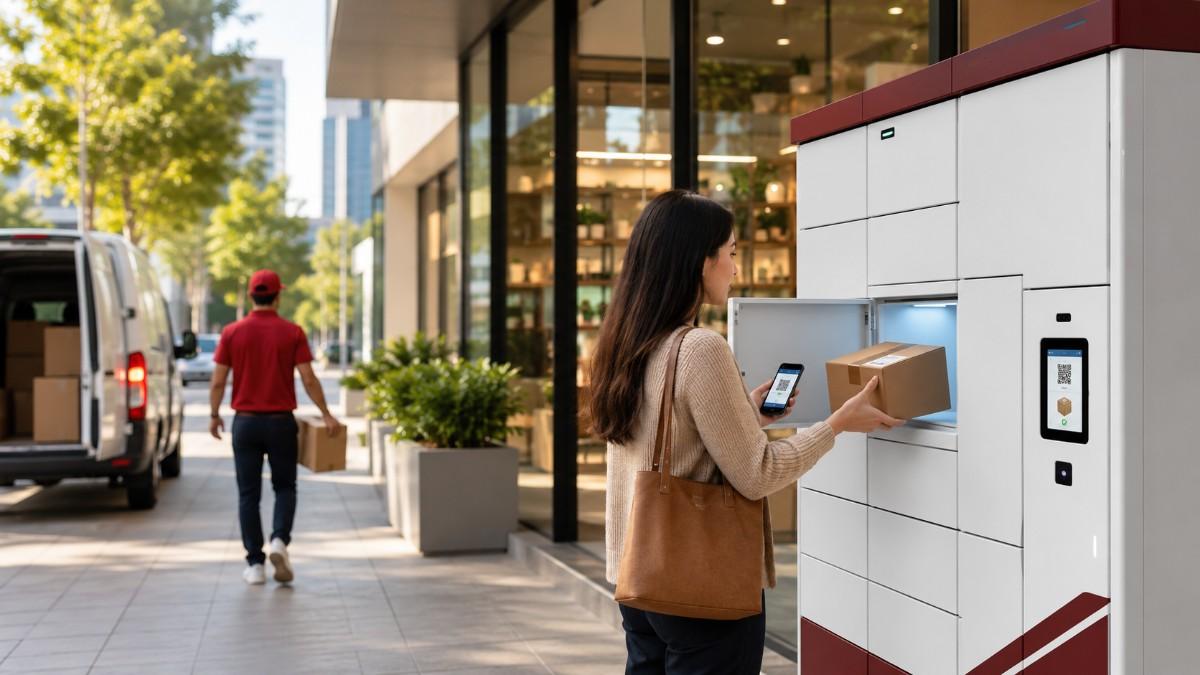
Smart lockers are moving from convenience to core last-mile infrastructure.
“The first half of 2026 has made one thing clear: smart lockers have moved from a “nice-to-have” convenience to core last-mile infrastructure. What started as a way to solve missed doorstep deliveries has evolved into a multi-purpose network powering returns, storage, retail pickup, and even device charging – and the last six months have brought some of the clearest signals yet of where the industry is headed.”
Consolidation Is Reshaping the Market
The biggest story of the year so far is structural. In February 2026, a consortium led by FedEx and existing investors agreed to take InPost – one of Europe’s largest automated parcel locker networks – private in a deal valued at roughly €7.8 billion (about $9.2 billion). InPost will keep operating independently and under its own brand, but the tie-up gives FedEx direct access to a continent-wide locker footprint while freeing InPost from the pressure of quarterly market expectations to invest more aggressively in expansion across France, Spain, Italy, Benelux, and the UK.
This kind of consolidation is a strong signal that lockers are no longer viewed as a side project by major logistics players – they’re being treated as strategic infrastructure worth billions in M&A activity.
Partnerships Are Multiplying
The first half of 2026 saw a noticeable increase in strategic collaborations across the smart locker industry. Rather than highlighting individual vendors, the broader trend reflects technology providers, logistics organizations, property operators, and software platforms working together to accelerate deployments, improve user experiences, and expand service capabilities.
These collaborations point to a maturing market where interoperability, scalability, and intelligent locker management are becoming increasingly important across industries.
The Technology Keeps Maturing
Beneath the deal-making, the underlying technology has kept advancing. Locker providers are increasingly building around:
- Contactless, multi-mode access – PIN, QR code, mobile app, and in some deployments biometric authentication – replacing single-method entry.
- Reverse logistics as a first-class use case, not an afterthought, with lockers handling returns and drop-offs alongside standard pickups.
- AI-driven capacity and route optimization, helping operators predict pickup windows and use compartment space more efficiently.
- Modular, faster-to-install hardware, cutting deployment time and letting operators redeploy units as demand shifts between locations.
The throughline across all of this is that lockers are becoming software-first. The hardware – the steel box on the sidewalk or in the lobby – is now just the visible layer of a cloud platform managing access, routing, notifications, and monetization behind the scenes.
Where Kineto Fits In
This is exactly the shift Kineto’s Intelligent Locker Management solution is built for. Rather than treating lockers as static delivery boxes, Kineto positions them as flexible service hubs for locker network operators, courier companies, and ecommerce platforms – supporting:
- Secure, 24/7 pickup and drop-off, removing the dependency on delivery time windows and cutting down on repeat delivery attempts.
- Self-service returns, with structured workflows that link returns back to the original order for validation and tracking.
- Multiple authentication methods – PIN, QR, and app-based access – for contactless, secure interactions.
- Flexible monetization models, including usage-based, rental-based, and customer-based pricing, so operators can turn locker space into a genuine revenue line rather than a cost center.
- API-driven integration with ecommerce platforms, courier networks, and payment gateways, plus a centralized cloud dashboard for real-time network monitoring and analytics.
That combination – secure access, reverse logistics support, and a monetization layer built in from day one – mirrors exactly where the broader industry is moving: away from single-purpose parcel boxes and toward connected, revenue-generating infrastructure.
Looking Ahead
If the last six months are any indication, the next half of 2026 will likely bring more of the same: continued consolidation among major networks, deeper retailer-carrier partnerships, and locker platforms that lean further into AI-driven operations and reverse logistics. For operators and businesses evaluating locker infrastructure, the message is consistent – the winners will be the platforms that combine hardware flexibility with a software layer smart enough to turn a locker network into a scalable, monetizable service.
– The Kineto Team